
Circus school offers competition-free alternative athleticism
March 3, 2015 at 9:56 PM | Emily Muirhead

Nick Harden (far left) leads students through a warm up to get their muscles ready before splitting off into different classes. Photo by Seth Halleran
You don’t have to wait for the Ringling Bros. or Cirque du Soleil to come to town to catch a glimpse of the circus. Even better, you don’t have to be a trapeze or juggling master to participate in circus life either.
The School of Acrobatics & New Circus Arts (SANCA), located in Seattle’s Georgetown neighborhood, claims to be the largest circus school in the nation. Founded in 2004 with only five students, SANCA has now grown to serve more than 1,000 students in weekly classes and has served almost 50,000 people in all.
Some of these students include members of the UW community, such as database developer Jason Page, who works in the UW Information Technology department. Page grew up juggling and after hearing about SANCA’s classes from a friend, said he found a perfect fit.
“As soon as I walked in I knew it was nothing like the rest of Seattle,” Page said. “It was so friendly and I immediately fell in love with it. It’s all positive, no ego, no competition.”
Page spoke of the competitive nature he experienced while participating in other “fringe” physical activities, such as climbing or cycling, both of which tend to have welcoming communities, but can inevitably become competitive — a mindset he says simply does not exist at SANCA.
“In Seattle if you don’t like team sports there’s not a lot of options,” said Jo Montgomery, co-founder of SANCA with Chuck Johnson. “We offer an alternative. Part of it is the culture we’ve created here. It’s OK to fail because the important thing is to try, and to encourage others.”
Montgomery said the facility serves people of all ages and there is no skill limit.
Montgomery also leads the Every Body’s Circus school within SANCA, designed for youth with disabilities like spina bifida or visual or hearing impairment. These students work on the same basic skills every student aims to accomplish, with the added benefit of enhancing social skills specifically adapted to their needs. Every Body’s Circus partners with Seattle Children’s Hospital, where Montgomery is a nurse practitioner.
SANCA offers more than 50 classes each quarterly session, including unicycling, trampoline, strength and flexibility, aerial trapeze, and Chinese pole. SANCA even offers a one-time “pay per flight” trapeze class Fridays.
“You just have to work up the courage to swing once and see if you like it,” Montgomery said.
Montgomery said she has seen countless times how acrobatics classes enable first-time participants to get over fears of heights and perceived limitations of their bodies.
Amber Parker, a case manager with the UW Alcohol & Drug Abuse Institute, said SANCA has changed her both physically and mentally. She has been attending SANCA classes for eight months, with no plans of stopping.
Parker said after a life of poor body-image and self-esteem, she found solace in SANCA’s strength-and-flexibility and adult aerial classes, which encourage personal improvement instead of striving to be the best. She even started a blog called “The Fatcrobat,” as a testament to personal strides she has made in her physical ability and confidence because of unconditional support from SANCA classes and coaches.
“It’s changed my perspective on what I can actually do,” Parker said. “I never thought I could do anything like this, so now that I can it opens up the ‘I can do anything’ mindset. Nothing is off limits now.”
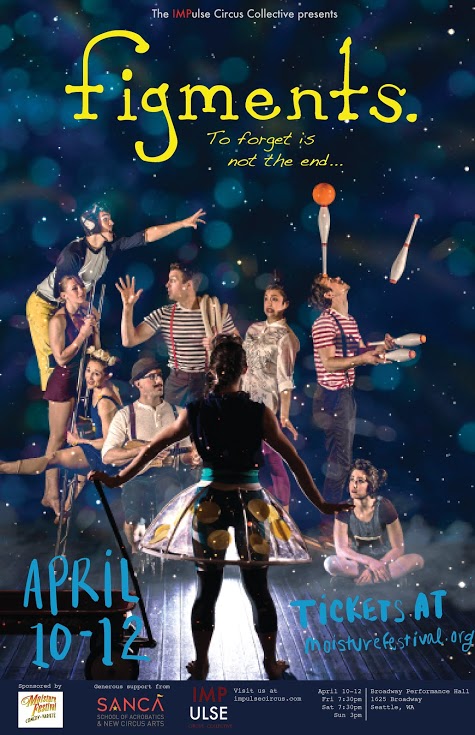
SANCA caters to professional performers as well. It often hosts gym time for performers from Teatro ZinZanni, or for artists in residence from groups such as IMPulse Circus Collective, The Acrobatic Conundrum, or Circus Syzygy.
Montgomery noted that when kids participating in classes see professional circus performers make mistakes, it shows them that struggling with a skill doesn’t have to be a disappointment, but can be inspiration for working toward personal goals at their own pace.
“Safety is huge here,” said Alyssa Hellrung, a part-time lecturer in the Gender, Women and Sexuality Studies department at the UW and an aerial trapeze coach. “But we do push kids physically and emotionally outside of their comfort zone.”
For those who have dreams of flying, the School of Flight program might be a good fit. Aside from SANCA’s main gym, which includes a tumble track trampoline, spring floors, climbing ribbons and poles, a “big top” and “tot room” for children, the trapezes are housed in an adjacent building designed for this literally high-reaching activity.
Hellrung sees SANCA classes as an opportunity for every type of person, regardless of body type or skill level, to learn what their bodies are capable of, and have some slightly unconventional fun.
“People assume that this is an insular world, but it’s not,” Hellrung said. “Not everyone feels sporty and this circus has room for everybody, even if you just want to learn to juggle. It still gives you the benefits of athletic activity without the pressure of having to compete at the end of every week.”
The circus often carries the stereotype of being a place for only those with strange skills such as contortionism, or having bizarre personalities. But SANCA strives to foster not only excellence in performance for most of its participants, but a personal confidence and welcoming environment over all else.
“I love telling people I’m in the circus,” Parker said. “Misconceptions open up dialogue. SANCA is really about fitness and community and connecting to other people.”
SANCA is located at 674 S. Orcas St. Visit their website, sancaseattle.org, for more information.
Reach writer Emily Muirhead at [email protected]. Twitter: @e_muirhead
Original story here: http://dailyuw.com/archive/2015/03/03/features/circus-school-offers-competition-free-alternative-athleticism#.VPcNdsauJRY


 I began to learn and see the great and superior potential within this beautiful work. I became more driven and filled with fortitude than ever. What an honor it was to be in a school where kindness, humility, discipline and hard work were all strongly encouraged. Shortly after I began training at SANCA I began teaching as well, SANCA became my second home and now as I am always many, many miles away I still feel that closeness.
 Now I am finishing my time at l’ecole nationale de cirque de Montreal. I have had experience with Cirque du Soleil, and have performed at international performances such as the 2010 Olympics Opening Ceremony in Vancouver, B.C. I am now preparing for the 32nd Festival Mondial du Cirque de Demain opening spectacle. I credit SANCA for starting my career. I would not be who I am today, or experienced the success I have if it were not for those welcoming doors and the people at SANCA who accepted me into their space. SANCA will always have a special place in my heart, and because of SANCA, I will never stop dreaming.
 We are Ben Wendel and Rachel Nehmer, trapeze artists known professionally as Duo Madrona. We have performed our trapeze number locally at a variety of venues including the Moisture Festival, nationally with Circus Flora and Teatro Zinzanni, and internationally at Le Cirque de Demain. We have been proud members of the SANCA community since 2004. Over the years we have filled the role of student, instructor, camp counselor, volunteer, office personnel, van driver, tarp stretcher and birthday-cake baker at SANCA.
 Fast-forward to January 2008, Paris. We waited anxiously behind the curtain, poised to present our act at the 29th Festival Mondial du Cirque de Demain. The festival is one of the top venues for new artists to show their work to the entire global circus community, and only 25 acts are chosen worldwide from thousands of applicants. Nervous, dizzy and disoriented, we struggled to hear the emcee above the pounding of our hearts. Such a mixture of terror and thrill, nausea and elation can make one feel quite alone. However out there in the audience, somewhere in that vast 3,000-seat circus tent was our SANCA family, including founders Chuck Johnson and Jo Montgomery, who had flown from Seattle to Paris in the winter to support us. In fact, this same family had been there for us at every single step, from our first days at the school as disaffected scientists discovering the joy of circus arts, through all the long hours in rehearsal, to representing SANCA as professional artists on an international stage.
 For the entirety of our career, SANCA has been our most important resource, the center of our artistic community, and our home. SANCA nurtured us as we made a great leap of faith to follow our dreams and become trapeze artists, and they continue to be a vital force in the community and in our lives personally. Without SANCA we would certainly not be the successful artists we are today.
 During my time with SANCA I was a student, instructor, and outreach coordinator. I taught circus classes to students ranging from toddlers to adults, helped to organize and orchestrate their blooming school outreach program, turned screws and bolts where needed, and constantly continued my own personal acrobatic training under the tutelage of Chuck and Jo. I loved my job, and my new circus community. My students were amazing, and the training I received as an instructor was invaluable.


