As we cross the threshold into a new year, I’d like to take a moment to look back in gratitude at a wonderful year of Social Circus.
The powerful impact of Social Circus is increasing in prominence all over the world and, as a result, researchers want to understand what Social Circus does, how it does it, and why it works.
 In 2017, SANCA participated in the first evidence-based, national study looking at the socio-emotional benefits of Social Circus on young people in the United States. Organized by the American Youth Circus Organization (AYCO) and the Weikart Center for Youth Program Quality, the study collected thousands of data points over nine months, with information that includes participating youth reporting on their own lives, program staff observations of youth behavior, and external program quality assessments. To support the research, AYCO asked SANCA to contribute to the data collection efforts which resulted in AYCO sending me to experience the rich diversity of Social Circus programs and Social Circus organizations in Saint Louis, Oakland, and San Diego.
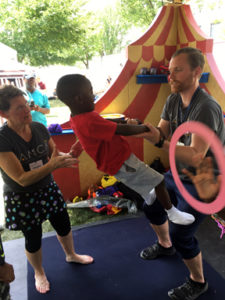 Beyond this major study, 2017 saw SANCA share our work out in the world unlike ever before. In June, SANCA participated in the 50th Smithsonian Folklife Festival, bringing our particular approach to adaptive circus to share with the 600,000+ visitors who attended the festival. SANCA was honored by the Smithsonian with being the only organization entrusted to directly engage the public in a variety of circus activities including: tightwire, acrobatics, trapeze, and aerial sling. During our time there, we introduced thousands of visitors of all ages, background, and abilities to their first experience of being a circus artist–it was fantastic!
Adding to this momentum, Social Circus was the theme of the AYCO Youth Festival in August. Hundreds of youth, coaches, parents, and administrators from all over America convened in Trenton, New Jersey for five days of circus, workshops, and performances. To contribute Social Circus leadership to the network, SANCA’s very own Every Body’s Circus manager Alex Clifthorne M.S.W. led a much-needed and very popular workshop on trauma and how to integrate trauma-informed practices into Social Circus work.
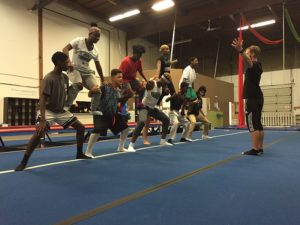
Coach Ian works with a group of teens from Seattle Youth Violence Prevention Initiative, teaching human pyramids.
Here at home, thanks to a major two-year grant from the Seattle Office of Arts and Culture and generous donations from community members, 2017 saw the RODA program expand into a school-year-long program. In partnership with the Rainier Vista Boys & Girls Club and the Seattle Youth Violence Prevention Initiative, RODA is using circus as an arts-based tool to cultivate job-readiness skills, in addition to all the other fantastic socio-emotional learning that occurs while practicing circus and developing an ensemble. Did I mention participating youth get a stipend for their work? By creating meaningful pathways to employment, we aim to give young people tools of empowerment and autonomy. Also, did you see SANCA has hired our first employee out of this program? Have a look at the blog article about our newest Social Circus Coach, Monte.
As SANCA’s Social Circus Program flourishes and grows, Cirque du Monde—the Social Circus program run by Cirque du Soleil—is taking notice. Emmanuel Bouchard, head of Social Circus training programs and partnerships for Cirque du Monde reached out earlier this year to ask if we would like to host a Social Circus training at SANCA. It was an easy “YES!”
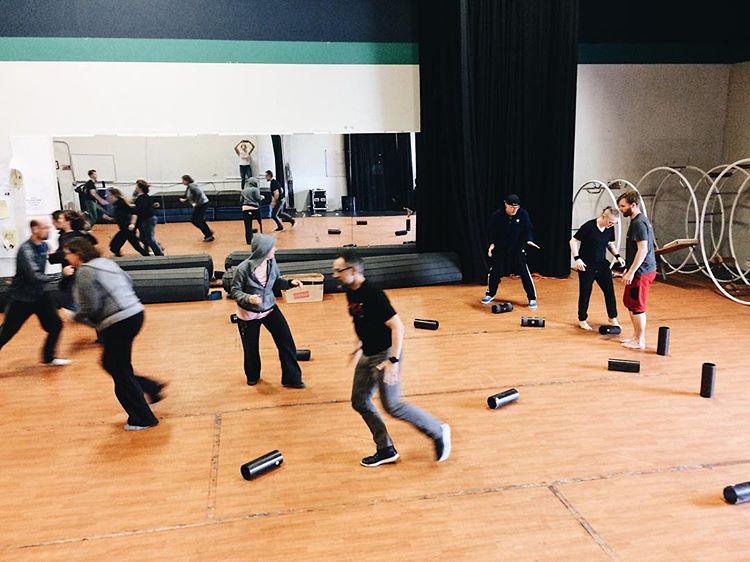
Social Circus training includes interactive games
This past October, SANCA welcomed social circus coaches from the four corners of the continental United States to participate in a training on the Cirque du Monde style of Social Circus. Master Social Circus trainers Blake Lanier M.S.W. from Atlanta, Georgia and Julie Thébèrge from Québec City, Québec were flown in to give us a 35-hour training intensive full of discussion, laughter, and enrichment. We explored topics ranging from ethics to the evolution of group dynamics to creativity, and this was only the first of a two-part training! Following this first training, participants are meant to apply what they’ve learned in the field and return in February 2018 for a second 5-day intensive with Cirque du Monde instructors.
SANCA is dedicated to being a leader of Social Circus and we are grateful for this opportunity to amplify the work on a national scale. Our partnership with Cirque du Monde is strong and they continue to ask us how they can invest in our future. Their investment in SANCA, combined with your incredible support, has sent us a clear message: Keep it up.
Looking ahead at 2018, we show no signs of slowing down.
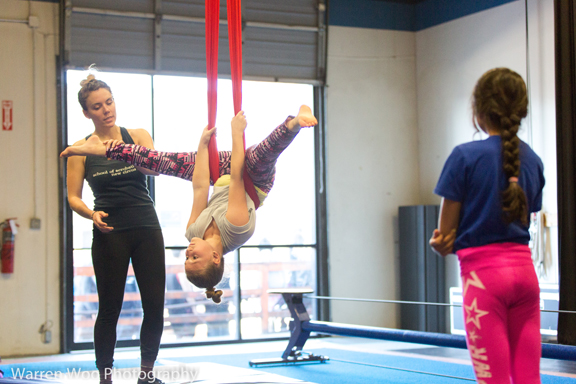 SANCA continues our commitment to develop as a leader in Social Circus, increasingly becoming a destination for students, practitioners and research.
The Every Body’s Circus roster is full with classes and camps that are beginning to draw students from across the nation. Social circus trainers from Louisiana, Arizona, New York, and Kentucky will return to SANCA for the Cirque du Monde Social Circus training intensive part II in late February. As for research, mid-January will see the publication of the AYCO & Weikart Socio-emotional Learning Study which will be a major step in understanding the powerful impact that Social Circus has on the lives of young people across the country.
By the way, Social Circus isn’t just for young people! We are excited to expand our adult Social Circus programming in 2018. Starting in January the new Transformational Women’s Circus (TWC) program will begin with an 11-week session that combines Social Circus with Drama Therapy and a multigenerational ensemble of adult women led by EBC coach Amber Parker. Winter Session is already full, but TWC will be returning in Spring for a second session. Online applications for Spring Session will open in February.
 In 2018, we will be joining the international circus community in a year-long celebration of the 250th anniversary of modern circus. Be on the lookout for events and performances celebrating the rich past, present, and future of circus. And in the spirit of Social Circus, we will be taking these festivities into communities all over Seattle! We invite you all to join us not just in celebration of others, but in taking your own place in the spectacular, vibrant history of circus arts.
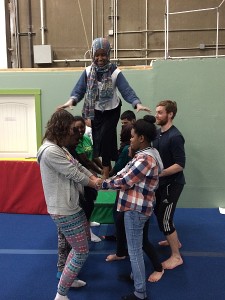
Ian Jagel works with a group of teens from Refugee Women’s Alliance (ReWA).
Around Seattle, our partnerships and connections to communities continue to thrive. With programs in schools, community centers, and nonprofit organizations, we are deeply committed to bringing the joys of circus not just to individual students, but to entire communities through classes, performances and events. As a heads up, we are in the early stages of working on an exciting new program with the Refugee Women’s Alliance (ReWA) Teen Program slated to begin in Fall 2018, more details will follow as they develop.
And this is only what is in our 2018 calendar so far. Who knows what other exciting developments will pop up? For now, please join us in celebrating a new year and a fresh start the Social Circus way–spectacularly!
Circus is the home of the spectacular yet so much more than spectacle: It is the universal, empowering potential of embodied circus practice. We invite you to share in our collective joy by trying it yourself. Have you signed up for your circus classes yet?
As always, thank you for enriching our community, and happy New Year!
Ian Jagel, Social Circus Director


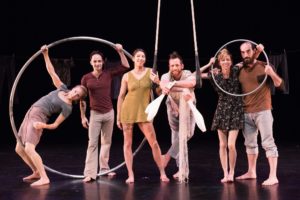 The Acrobatic Conundrum, the contemporary circus group founded by Terry Crane, have spent the last three months touring the western United States with their show, Love and Gravity. Now they have returned to Seattle presenting two new shows: a cabaret, “
 SANCA – “A circus artist trains and works so hard in bringing their art to the stage. Powering up with healthy food must be very important. What is the best snack to pair with your apparatus of choice?”
 ANCA– “Finish this sentence: At the end of a best day in circus I feel…”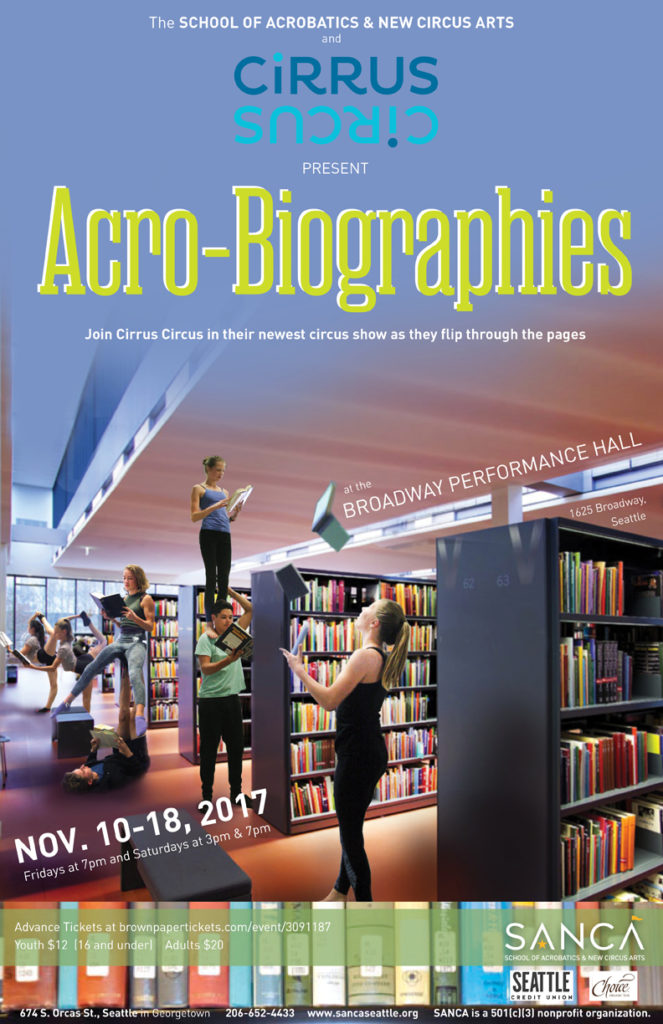
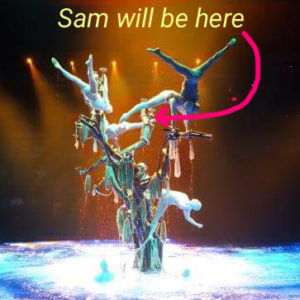 Originally from Spokane, Washington, Sam is a professional acrobat with more than five years of professional performance experience in both hand balancing and hand-to-hand acrobatics. He has trained under artists in Cirque du Soleil and world champion sports acrobats. He also has experience coaching hand balancing classes and teaching private lessons and workshops all around America. Sam has been coaching at SANCA for about a year.
 Fun in the sun and good times to be had for all at Summer on the Cirque Riviera! Take a stroll through the Mercado del Mar. Catch some rays poolside with buff babes and saucy sailors, but beware of pool sharks! Or just relax and beat the heat with a glass of wine, or perhaps something stronger at Cirkuski Kafić where you may even catch a glimpse of the Green Fairy.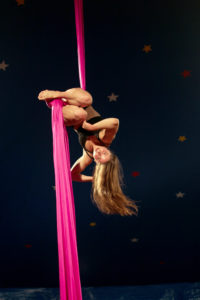
 By Adrian Hillyer, LAc, LMP
 An average circus class length is 1-2 hours, depending on the class. The following tips are all based around that time frame, as the rules change for those training over 2.5 hours. When thinking about hydration it is important that intake is balanced throughout the day, versus drinking a large amount in one sitting, especially right before class. Research shows us that hyperhydration (too much water) can be just as negative on our bodies as dehyrdation (not enough water).
 promote recovery afterwards. Food can be broken into three parts: Carbohydrate, Fat, and Protein. Each of these plays a vital role in our health and performance. We often give carbs and fat a bad reputation, but they are actually very useful. Carbohydates help to create instant fuel for our bodies and good fats such as Omega 3 fatty acids are essential for our cell membranes and can help decrease inflammation in the body. What we want to limit or avoid are simple refined sugars (such as soda) and high levels of saturated fats (specifically trans fats found in foods such as French fries and that greasy burger). Good sources of complex carbohydrates can be found in fruit, veggies and grains. Good (unsaturated) fat can be found in foods like nuts and fresh coldwater fish. Protein is the third component mentioned above and is fundamental in building and repairing muscle tissue. While the commonly known high protein foods are meats, there are also many plant based proteins, such as beans, legumes, and nuts to round out a balanced diet.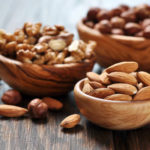


 Nate: I actually can’t get enough of games. Board games, video games, you name it. I also love anything outdoors: hiking, biking, running. An ideal day for me is a hike in the mountains with my wife and my dog Balto. He’s the 7-month year old husky-mix currently in contention as the cutest dog at SANCA.


